Public record · House STOCK Act disclosures
Who’s actually the best stock trader in Congress? (It isn’t Pelosi.)
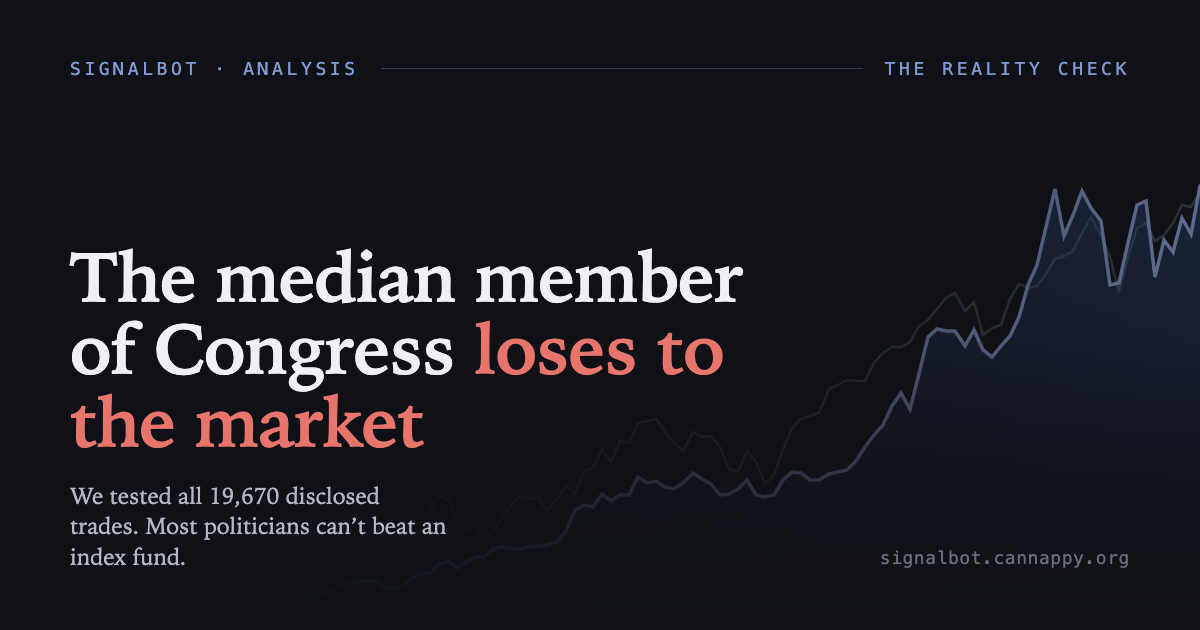
We ranked every House member with a real trading history by the honest number — the median result of their trades, not the cherry-picked cumulative figure the headlines quote. Three in four can’t beat an index fund.
The method
For each member we took every disclosed stock purchase since 2013, bought it on the disclosure date (the first day you could), held twelve months, and scored it against the S&P 500 — the same test from our reality-check on whether copying Congress works. Then we took each member’s median trade, so one lucky moonshot can’t carry a reputation. Only members with 15+ tracked buys qualify.
The top of the table
The best — and most are not household names
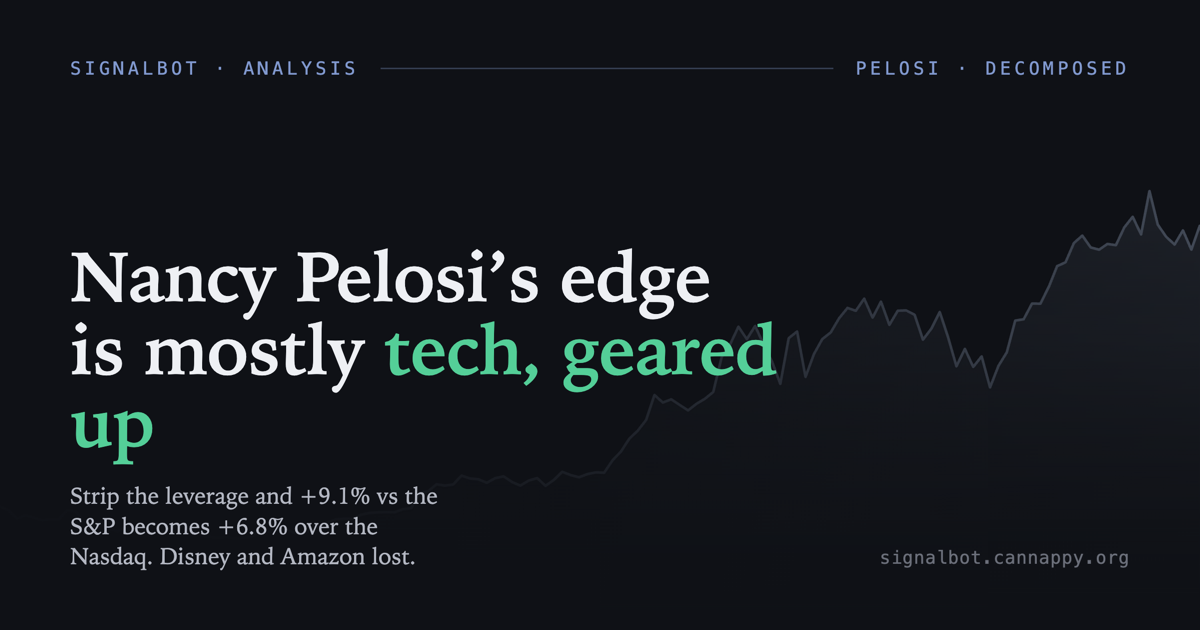
Nancy Pelosi is real, but she ranks fifth. The leader is Rep. Mark Green, whose disclosed buys posted a +26.7% median with a 77% win rate across 189 trades.
The bottom of the table
The worst lose to the market by double digits
The bottom of the ranking is uglier than the top is impressive. Rep. Austin Scott’s median trade trailed the S&P by −45% at twelve months, winning just 1 time in 10.
Pick a member of Congress at random and you are three times more likely to draw a market-loser than a market-beater.
And even the leaderboard hides a catch. Rep. Donna Shalala ranks tenth-best — yet she files 100% of her trades late, a median of 405 days after the fact, so you could never have acted on her “edge” in time. That’s a different scandal, and it has its own post.
What this is and isn’t
- Survivorship. Delisted and acquired tickers (~15–18%) drop out of the price history, distorting absolute levels. Directionally — most members underperform — the result is stable across every window.
- Selection. The 15-buy floor selects for active traders. A high rank on 18 trades (Kinzinger) is thinner evidence than one on 189 (Green).
- Not advice. Median trade returns vs a benchmark, equal-weight, no costs or leverage. Reproducible from public filings.